
Hypnosis

Hypnosis Video Demo 🎬
Table of Contents
What Is Hypnosis
Hypnosis is a superpower that lets a user place a target into a focused trance state and then influence thoughts, choices, or actions through carefully delivered suggestions. In superpowered fiction, Hypnosis often looks like “instant mind control,” but at its core it’s closer to steering attention, lowering resistance, and planting compelling ideas that feel natural to the target.
Because Hypnosis works through perception and psychology, it tends to be subtle. A skilled user can make an opponent hesitate, forget a key detail, misjudge distance, or follow a harmless-sounding instruction that becomes dangerous seconds later. Readers exploring more abilities like this can browse the superpower wiki for related powers, or jump straight to the random superpower generator to discover a new ability concept.
Core abilities of Hypnosis
A Hypnosis user typically has a toolkit of mental techniques rather than one single “on/off” effect. Common core abilities include:
- trance induction: pulling attention into a narrow focus (a voice, a gaze, a rhythm, a symbol, or a repeated phrase) until the target becomes suggestible
- suggestion planting: inserting a directive the target experiences as their own idea (“drop it,” “stand still,” “you’re safe,” “walk away”)
- compliance shaping: nudging behavior in small steps that feel reasonable, then escalating as resistance drops
- post-hypnotic triggers: embedding a condition that activates later (a snap, a keyword, a hand sign, a bell tone)
- memory fog and misdirection: causing gaps, false confidence, or swapped recollections (“the door was locked,” “you already checked that corner”)
- sensory filtering: making the target ignore specific stimuli (“you can’t hear the alarm,” “you don’t notice the ally behind you”)
- emotional smoothing: reducing panic or aggression to slow reaction time and weaken decision-making
- crowd influence (advanced): broadcasting cadence and suggestion patterns to sway multiple targets at once
In many settings, Hypnosis is strongest when it feels invisible. The best users don’t force a target to do something obviously suicidal right away. They guide a target into choices that seem safe, moral, or self-preserving—until the trap closes.
Application / Tactical Advantages in Combat
Hypnosis is a control power, meaning it wins fights by rewriting the battlefield’s decision-making rather than by brute force. Used tactically, it can end a confrontation without a punch—or set up a decisive strike with minimal risk.
Key combat advantages include:
- initiative theft: making an enemy pause, blink, or reassess at the exact moment timing matters
- disarming and de-escalation: compelling surrender, redirecting aggression, or stopping a lethal attack
- positional control: instructing a target to step into a choke point, leave cover, or turn their back
- target denial: ordering a foe to ignore allies, fail to call for backup, or abandon an objective
- confusion pressure: creating contradictions in the target’s perception (“you’re surrounded,” “your weapon is jammed”)
- interrogation leverage: extracting information when the target’s guard is down (often with ethical consequences)
Level: Level 1 🏙️**, Level 2** 🌇**, Level 3** 🌃
Level 1 🏙️
At Level 1, Hypnosis is local and momentary. The user can influence a single target with clear cues such as eye contact, a calm voice, or rhythmic sound.

Typical Level 1 feats:
- brief stun or hesitation (one to three seconds of “blanking out”)
- simple directives with low risk (“stop,” “look over there,” “sit,” “drop your weapon”)
- mild perception bias (“you don’t feel like fighting,” “you can’t focus on the pain”)
- shaky post-hypnotic triggers that fade quickly
This level shines in duels, hostage situations, and any scenario where a fraction of a second decides the outcome.
Level 2 🌇
At Level 2, Hypnosis becomes structured. The user can deepen trance faster, maintain it longer, and layer suggestions.

Typical Level 2 feats:
- multi-step commands (“walk to the door, lock it, then wait”)
- selective amnesia or false memory insertion (short windows, recent events)
- stronger triggers that can persist for hours or days
- resistance management (working around the target’s skepticism by reframing commands as self-benefit)
- limited multi-target influence (two to five targets) if conditions are favorable
At this level, Hypnosis starts to feel like battlefield choreography: enemies move where the user wants them, not where they intended.
Level 3 🌃
At Level 3, Hypnosis approaches strategic domination. The user can influence groups, sustain long-term conditioning, and operate with minimal tells.
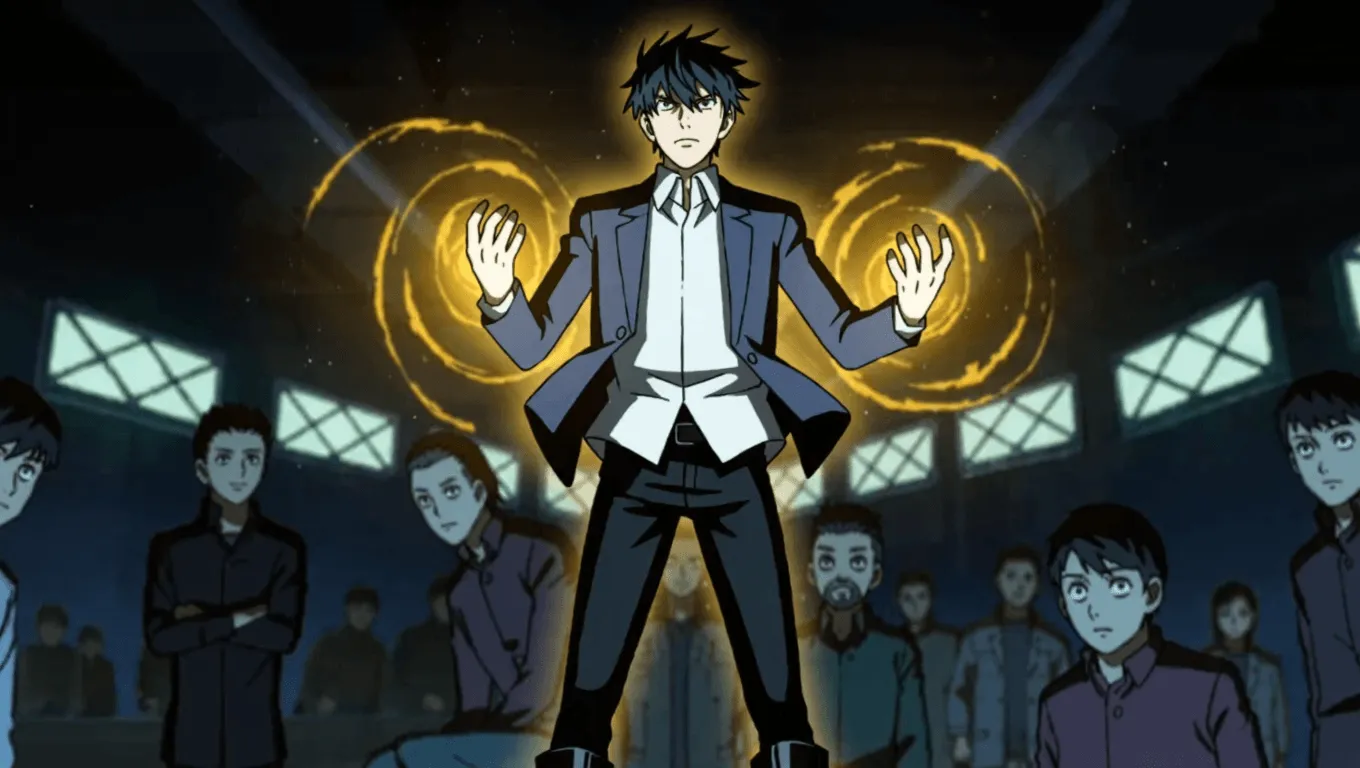
Typical Level 3 feats:
- crowd trance via speech cadence, symbols, or environmental rhythm
- remote-style influence through mediated signals (broadcast audio, repeated patterns, staged “memes” in-setting)
- deep personality overlays (temporary “roles” the target believes completely)
- durable post-hypnotic programming with layered safety locks and multiple triggers
- rapid re-hypnosis: snapping a target back into trance repeatedly in a single engagement
High-level Hypnosis is terrifying not because it is flashy, but because it can reshape loyalties, missions, and memories while leaving the target convinced they acted freely.
Limitations of using the Hypnosis
Even as a supernatural ability, Hypnosis usually has practical constraints that keep it from solving every encounter instantly:
- access requirement: many versions need a cue channel—voice, gaze, touch, sound, or a visual pattern. If the cue is blocked, the power weakens or fails.
- time to sink in: deeper trances often require seconds to minutes. A frantic, fast-moving fight can reduce effectiveness.
- mental friction: targets with intense discipline, training, or focus may resist, require repeated attempts, or break trance under stress.
- command plausibility: the more a suggestion contradicts the target’s core values or survival instincts, the harder it is to enforce.
- cognitive overload: complex instructions can collapse under chaos; simpler suggestions stick better.
- backlash risk: failure can reveal the user’s intent, turning the fight into a “protect your senses” scramble.
- ethical cost: long-term conditioning, memory editing, and coerced consent can create severe narrative consequences—legal, social, and psychological.
These limitations are useful for worldbuilding because they reward planning and skill over raw power.
Weakness against what other superpowers
Hypnosis has clear counters, especially from abilities that interrupt perception, protect the mind, or remove the “human” psychological interface.
Common counters include:
- mental shielding and psychic barriers: powers that explicitly block intrusion can reject trance and suggestion outright.
- telepathy and mind-reading: a psychic ally can detect external influence, pull a target out of trance, or retaliate against the hypnotist.
- enhanced wits or hyperfocus: superhuman processing and attention control can reduce suggestibility and spot manipulation patterns early.
- pain immunity and extreme adrenaline control: if the target cannot be calmed or “slowed,” trance hooks are harder to set.
- sensory disruption: deafening noise, strobe effects, blindness, or signal scrambling can break the hypnotic channel.
- non-human minds: robots, hive minds, or beings with alien cognition may not respond to human-style suggestion at all.
- emotion manipulation: if another power forcibly spikes fear, rage, or clarity, it can shatter the calm focus Hypnosis relies on.
In short, Hypnosis is strongest when it can establish a stable line of influence—and weakest when perception is denied or the mind is defended.
Synergistic Power Combos
Hypnosis becomes far deadlier when paired with powers that control the environment, the senses, or the target’s emotional baseline. Strong synergy examples include:
- invisibility or merging vision: the hypnotist stays unseen, speaks once, and vanishes before the target realizes anything happened.
- illusionary magic: illusions provide a “reason” for suggestions to feel logical (“the bridge is safe,” “your ally is an enemy”).
- darkness mimicry or shadow control: reduced visibility narrows attention, making targets cling to the hypnotist’s voice as an anchor.
- emotion manipulation: calm makes trance easier; sudden comfort can lower defenses; controlled fear can herd targets into compliance loops.
- siren song: melodic compulsion stacks naturally with trance induction, creating a near-inescapable attention trap.
- enhanced wits: better timing, language selection, and psychological reading turns Hypnosis into a precision tool rather than a blunt weapon.
- neurocognitive deficit: if a target’s memory and focus are already impaired, suggestions slide in with less resistance.
Synergies like these let Hypnosis function as a force multiplier: it doesn’t need to win the fight alone, it just needs to make the opponent lose it.
Known Users
Hypnosis appears across comics as either classic “stage mesmerism” taken to extremes or modern mind control framed as psychic influence.
- Mesmero — A notable Marvel hypnotist known for powerful suggestion and control techniques. Marvel character profile: Mesmero
- Purple Man — Uses chemical influence and suggestion to dominate actions, often portrayed as an especially sinister form of coercive control.
- Maxwell Lord — A DC character strongly associated with mind control, sometimes depicted with physical strain when overusing the power.
- Mister Mind — A villain whose psionic arsenal is often listed as including hypnosis among broader mental powers.